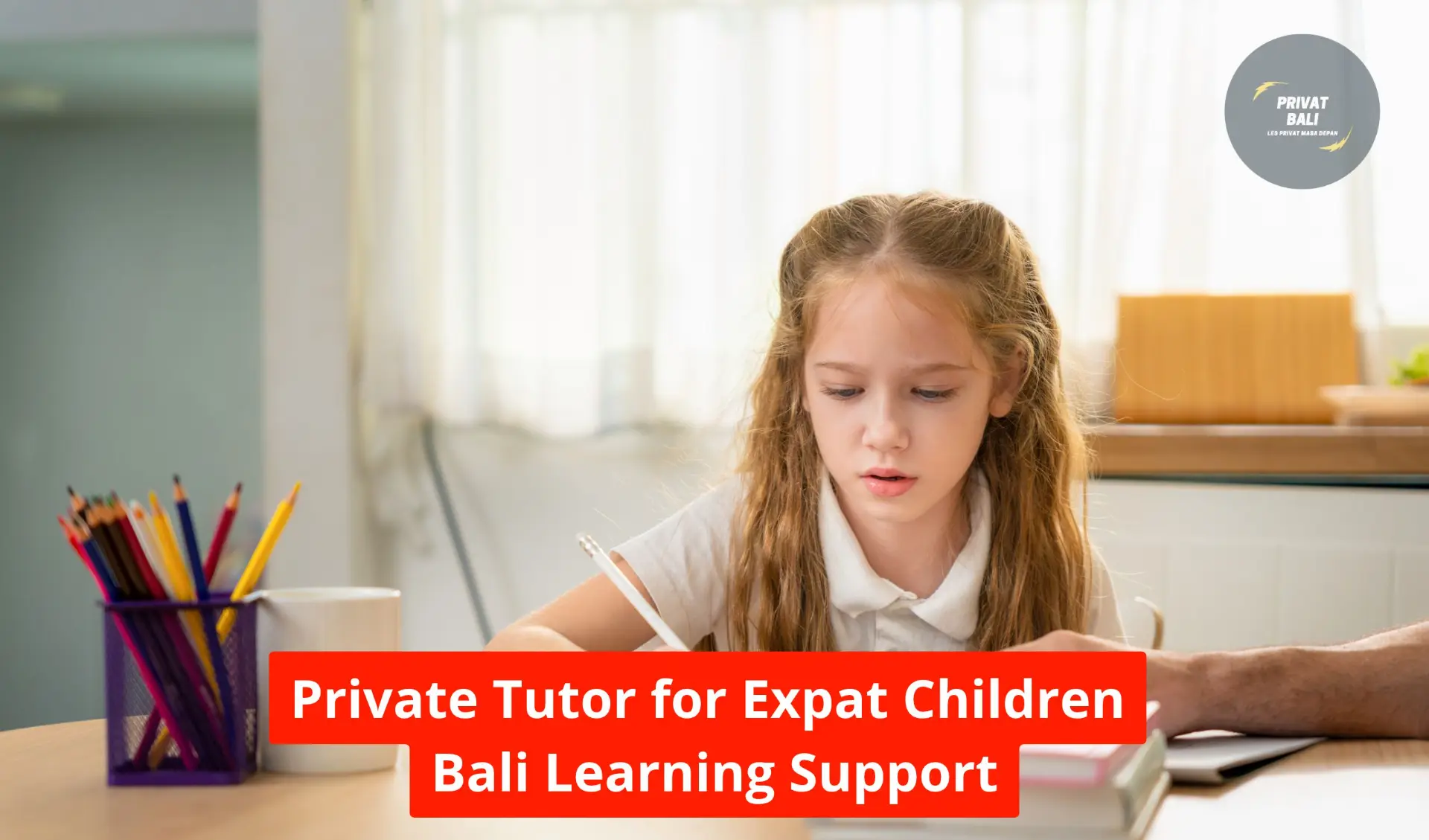
Looking for a private tutor for expat children in Bali? Explore English speaking tutors, international curriculum support and personalised home tutoring.
Moving to Bali can open exciting opportunities for children and their families. However, maintaining academic consistency while adapting to a new country, school environment, and educational system requires thoughtful support. A Private Tutor for Expat Children Bali gives international families a more personalised way to maintain their children’s academic progress while helping them feel comfortable in a new learning environment.
For expatriate parents, finding the right tutor involves more than choosing someone who understands school subjects. Children may follow different international curricula, communicate primarily in English, or need additional guidance after changing schools. Therefore, a suitable tutor should understand these educational differences and adapt lessons to each child’s academic level, language preferences, and learning goals.
At Privat Bali, families can explore private tutoring arrangements that support individual learning needs. Whether a child attends an international school, follows a homeschooling programme, or needs additional academic guidance, personalised lessons can make everyday learning more manageable.
Why Private Tutoring Matters for Expat Children in Bali
Relocating to another country can influence a child’s academic routine in several ways. A new school may introduce unfamiliar teaching methods, different assessment standards, and new classroom expectations. Although many children adapt quickly, others need additional time to understand these changes.
Furthermore, expatriate families often move between countries for professional opportunities, lifestyle preferences, or family commitments. These transitions can interrupt learning continuity, particularly when children change schools during an academic year.
Private tutoring provides additional educational support without requiring children to change their existing school arrangements.
A dedicated tutor can review classroom topics, explain difficult concepts, support assignments, and identify areas that require further attention. Consequently, children receive guidance that reflects their actual learning needs rather than following a standard teaching pace.
Supporting Children Through International School Transitions
International school transitions can involve differences in subject sequencing, terminology, assessment methods, and classroom expectations.
For example, a child who previously studied under a British curriculum may encounter a different learning structure after joining an IB school. Although both programmes develop academic knowledge, they approach learning and assessment differently.
A private tutor can help students understand these differences through targeted explanations and relevant exercises. In addition, the tutor can review previous knowledge to identify gaps before introducing unfamiliar topics.
This approach helps children adjust without feeling overwhelmed by additional academic pressure.
Maintaining Academic Consistency During Relocation
Children who relocate frequently may experience interruptions in mathematics, science, English, and other core subjects. Even when schools cover similar topics, their teaching sequences may differ.
Regular tutoring creates a more consistent learning routine. For instance, a tutor can review previous lessons, introduce relevant concepts, and help children prepare for upcoming school activities.
As a result, families can maintain a clearer academic direction even when their residential location or school arrangements change.
Building Confidence in a New Learning Environment
Academic confidence influences how children participate in classroom activities, communicate with teachers, and approach unfamiliar assignments.
Some expatriate children hesitate to ask questions when they encounter unfamiliar terminology or different teaching expectations. Others understand the subject but struggle to explain their answers confidently in English.
One to one tutoring gives children additional opportunities to ask questions, practise explanations, and work through challenging exercises at their own pace.
Over time, this individual attention can encourage greater independence and a more positive attitude towards learning.
English Speaking Private Tutor for Expat Children Bali
English communication plays an important role in international education. Many international schools in Bali use English as their main language of classroom instruction, although individual schools may offer additional languages and bilingual programmes.
Bali Island School, for example, describes English as the language of instruction across its school programmes.
Therefore, an English speaking private tutor can help expatriate children understand academic instructions, develop subject vocabulary, and communicate their ideas more clearly.
However, effective English tutoring involves more than practising everyday conversation. Children also need academic language skills that help them understand textbooks, complete assignments, participate in discussions, and write structured responses.
Developing Academic English Skills
Academic English differs from casual conversation. Students need to understand subject specific vocabulary, interpret written instructions, explain concepts, and organise information logically.
A tutor can introduce these skills through practical activities connected to the child’s schoolwork.
For example, a science student may understand how evaporation works but struggle to explain the process in a structured paragraph. The tutor can introduce relevant vocabulary, demonstrate sentence organisation, and encourage the student to describe the process independently.
Similarly, mathematics tutoring can include interpreting word problems, explaining calculation methods, and presenting answers clearly.
This integrated approach allows children to strengthen their language abilities while continuing to develop subject knowledge.
Improving Reading and Writing Confidence
Reading comprehension and written communication influence performance across several academic subjects.
Students need to identify important information, understand unfamiliar vocabulary, recognise relationships between ideas, and develop coherent responses.
Private lessons can address these skills through age appropriate reading materials, guided writing exercises, vocabulary development, and constructive feedback.
Furthermore, a tutor can select materials that reflect the child’s interests. A student who enjoys environmental science, for example, may respond positively to reading activities about marine ecosystems or conservation in Bali.
When learning materials feel relevant, children often find it easier to engage with new vocabulary and express their ideas.
Supporting Multilingual Children
Some expatriate children grow up speaking two or more languages. Although multilingualism offers valuable communication opportunities, children may develop different levels of confidence across speaking, reading, and writing.
A personalised tutor can recognise these differences and adjust lesson activities accordingly.
For example, a child may speak English confidently but need additional support with academic writing. Another child may understand classroom explanations but require more time to develop spoken communication.
Instead of assuming that every multilingual student has identical needs, the tutor can focus on the specific skills that require attention.
International Curriculum Tutoring in Bali
One of the most important considerations when choosing a private tutor for expatriate children involves curriculum familiarity.
Bali has an international education environment that includes several academic pathways. Depending on the school, families may encounter the International Baccalaureate, Cambridge International, Australian Curriculum, and other educational frameworks.
These programmes follow different approaches to subject organisation, learning objectives, assessment, and academic progression.
For example, ACS Bali follows the Cambridge International Curriculum in its primary and secondary programmes, with an intended progression towards the IB Diploma Programme in senior years.
Therefore, parents should identify their child’s current curriculum before arranging additional academic support.
IB Curriculum Private Tutoring
The International Baccalaureate encourages students to develop independent thinking, research abilities, communication, and connections between different subjects.
Depending on the student’s age, tutoring may support the Primary Years Programme, Middle Years Programme, or Diploma Programme.
For younger learners, lessons can strengthen foundational mathematics, reading, writing, and inquiry based learning.
Older students may need additional support with subject understanding, research organisation, analytical writing, and examination preparation.
For Diploma Programme students, tutors can also help explain difficult subject concepts and improve academic study techniques.
However, tutoring should complement the school’s academic requirements rather than replace independent assignments or the student’s own research.
Cambridge Curriculum and IGCSE Support
Cambridge programmes follow structured academic pathways that develop subject knowledge and prepare students for increasingly advanced assessments.
Students may need additional guidance with mathematics, English, biology, chemistry, physics, economics, and other subjects.
For IGCSE students, effective tutoring can focus on understanding syllabus content, practising examination questions, interpreting command words, and improving time management.
For example, a student who understands a scientific topic may still lose marks because they misunderstand examination instructions. A tutor can explain the difference between commands such as describe, explain, compare, and evaluate.
Consequently, students can develop a clearer understanding of how to communicate their knowledge in assessments.
Australian and Other International Curricula
Expatriate families may also follow Australian, American, European, or other educational pathways.
Each system can introduce different subject expectations, assessment formats, and academic terminology. Therefore, parents should discuss the exact school programme and year level when selecting a tutor.
A suitable tutor should review available learning materials, understand the student’s current academic objectives, and identify where additional guidance can make a meaningful difference.
This preparation helps maintain continuity when children move between schools or return to their home country.
Home Tutoring for Expat Families Across Bali
Convenience plays an important role in educational planning for international families.
Parents may manage professional responsibilities, school transportation, extracurricular activities, and family commitments. Consequently, travelling to a separate tutoring centre after school may create unnecessary pressure.
Home tutoring offers a practical alternative by bringing lessons directly to the family’s residence.
Depending on the agreed arrangement, sessions can take place at a private house, villa, or another suitable learning environment.
Private Tutor at Home or Villa
A familiar environment can help children feel comfortable during individual lessons.
They can access their schoolbooks, notebooks, learning materials, and other resources without travelling between locations.
Additionally, parents can coordinate tutoring around school hours, sports activities, music lessons, and family routines.
For families living in Canggu, Berawa, Umalas, Seminyak, Sanur, Denpasar, or Ubud, location and tutor availability should form part of the initial discussion.
The family should confirm whether the tutor can travel to the preferred address and whether the agreed schedule allows enough time for consistent learning.
Flexible Learning for International Families
Expatriate lifestyles do not always follow conventional schedules. Some parents travel for work, while others manage temporary accommodation or extended family holidays.
Private tutoring can offer greater flexibility than a fixed group learning schedule.
For example, a family staying in Bali for several months may prefer regular lessons that follow the child’s existing school programme. Another family may need focused academic support during a school holiday.
Online tutoring can also provide continuity when a child travels or temporarily changes location, provided the tutor offers this arrangement.
Continue reading for practical ways to select a suitable tutor and organise your child’s learning programme.
A Comfortable Learning Space for Children
The learning environment can influence concentration and participation.
Parents should choose a quiet area with suitable lighting, a comfortable chair, and enough space for books or a laptop.
They should also minimise interruptions during lessons whenever possible.
For younger children, a familiar setting can help create a positive learning experience. Older students may prefer a dedicated study area that supports independent work and examination preparation.
A consistent learning space also helps children associate tutoring sessions with concentration and academic progress.
Academic Tutor for Expat Children Bali and Personalised Learning
Every child has different academic strengths, interests, and learning challenges. Therefore, an effective private tutoring programme should reflect individual requirements rather than rely on identical lesson plans.
An academic tutor for expat children Bali can support students across several subjects while maintaining a clear focus on their school curriculum.
The first step involves understanding the student’s current academic situation.
Parents can share information about the child’s school, year group, subjects, recent assessments, and specific difficulties. The tutor can then use this information to plan relevant learning activities.
Mathematics and Science Tutoring
Mathematics and science often require students to connect theoretical knowledge with practical problem solving.
Some children understand basic concepts but struggle when questions introduce unfamiliar examples. Others need additional practice with calculations, formulas, scientific terminology, or written explanations.
Individual tutoring allows the teacher to identify where the difficulty begins.
For example, a student who struggles with algebra may need to revisit fractions, negative numbers, and basic equations before moving towards more advanced problems.
Likewise, a biology student may benefit from diagrams, concept explanations, and structured revision activities.
By addressing foundational knowledge, the tutor can help students approach more demanding material with greater confidence.
English, Literacy, and Communication
English tutoring can support reading comprehension, grammar, vocabulary, spelling, creative writing, and academic communication.
The tutor can adjust activities according to the student’s age, language background, and school expectations.
Younger learners may benefit from phonics, storytelling, reading practice, and vocabulary games.
Meanwhile, teenagers may require more advanced support with essays, research, literary analysis, presentations, and examination responses.
Homework Guidance and Independent Study
Homework often reveals areas where students need additional explanation.
A tutor can help children understand instructions, organise their approach, and practise the underlying concepts.
However, effective academic support should encourage independence rather than complete assignments on the student’s behalf.
The tutor can demonstrate methods, ask guiding questions, and review the student’s reasoning.
As a result, children learn how to approach similar tasks independently in the future.
How to Choose the Right Private Tutor for Expatriate Families
Choosing a suitable tutor requires careful consideration of academic knowledge, communication, teaching experience, and personal compatibility.
A strong academic background matters, but it does not automatically guarantee effective teaching. Children also need a tutor who can explain concepts clearly, recognise learning difficulties, and maintain a supportive learning environment.
Before making a decision, parents should consider several important factors.
Review Academic Qualifications and Teaching Experience
Ask about the tutor’s educational background, subject expertise, and previous teaching experience.
If your child follows an international curriculum, discuss whether the tutor understands its academic structure and assessment expectations.
Parents can also request information about relevant teaching experience with children of similar ages and academic levels.
These discussions help families understand whether the tutor’s background matches their expectations.
Evaluate English Communication Skills
Clear communication helps children understand explanations and feel comfortable asking questions.
Parents should consider whether the tutor can communicate naturally in English and explain complex ideas using language appropriate to the child’s age.
It is also useful to discuss how the tutor communicates with parents.
Regular updates can help families understand lesson objectives, areas of improvement, and topics that need further practice.
Discuss Learning Goals and Progress Monitoring
Before lessons begin, establish realistic academic objectives.
These goals might include improving reading comprehension, strengthening mathematics foundations, preparing for IGCSE examinations, or developing better study habits.
The tutor should explain how lessons will address these objectives.
Progress monitoring can include reviewing completed exercises, comparing assessment performance, observing independent problem solving, and discussing learning challenges.
Parents should remember that meaningful progress takes time. Therefore, realistic expectations and regular communication matter more than promises of immediate academic results.
Consider Personality and Teaching Compatibility
A child’s relationship with the tutor can influence engagement and motivation.
Some children respond well to structured explanations, while others benefit from visual activities, practical examples, or discussion based learning.
A good tutor recognises these differences and adjusts their teaching approach.
Parents should also encourage children to share their experiences after lessons. Their feedback can help determine whether the learning arrangement feels comfortable and productive.
Why Expat Families Should Consider Private Tutoring in Bali
Private tutoring can offer several advantages when families want to maintain educational continuity while enjoying life in Bali.
It combines individual academic attention with a flexible learning arrangement that can accommodate international school requirements.
More importantly, it gives children additional space to develop at a pace that reflects their abilities and learning preferences.
For families who frequently relocate, personalised tutoring can also create a more consistent academic routine.
Rather than relying entirely on the changing structure of each school transition, parents can arrange supplementary support around their child’s ongoing educational needs.
If you are exploring suitable academic support, take a look at the available programmes through Privat Bali’s private tutoring shop. You can review the available options and discuss an arrangement that matches your child’s curriculum, preferred subjects, and learning schedule.
Frequently Asked Questions About Private Tutors for Expat Children in Bali
What is a private tutor for expat children in Bali?
A private tutor for expat children in Bali provides personalised academic instruction for international students living on the island.
Tutoring can include English, mathematics, science, reading, writing, homework guidance, and international curriculum support. Lessons can follow the child’s school requirements and individual learning objectives.
Can a private tutor support children attending international schools?
Yes. Private tutoring can complement international school education by helping students understand classroom topics, complete independent practice, and prepare for assessments.
Depending on the tutor’s expertise, support may include IB, Cambridge, IGCSE, Australian Curriculum, and other international programmes.
Parents should confirm curriculum familiarity before selecting a tutor.
Are English speaking private tutors available in Bali?
Families can explore English language tutoring arrangements through private tutoring providers in Bali.
An English speaking tutor can help children develop academic vocabulary, improve reading comprehension, strengthen writing skills, and communicate more confidently.
Parents should discuss the child’s current English proficiency and preferred language of instruction before arranging lessons.
Can tutors teach children at home or in a villa?
Home tutoring provides an opportunity for children to study in a familiar environment.
Depending on tutor availability and location, families can discuss lessons at their residence or villa. This arrangement can help parents coordinate academic support around school schedules and family activities.
Which areas in Bali can expatriate families request tutoring?
Families can enquire about tutoring arrangements in popular residential areas, including Canggu, Berawa, Umalas, Seminyak, Sanur, Denpasar, and Ubud.
However, actual availability depends on the tutor’s location, schedule, and travel arrangements. Parents should confirm service coverage before booking.
How often should expat children have private tutoring?
The ideal frequency depends on the child’s academic needs, school workload, and learning objectives.
Some students benefit from one or two sessions per week to reinforce classroom learning. Others may require more frequent lessons during examination preparation or when addressing specific academic difficulties.
A tutor can help parents determine a manageable schedule after reviewing the student’s requirements.
Can private tutoring help children who recently moved to Bali?
Yes. Private tutoring can help children adjust to unfamiliar academic expectations and maintain continuity during school transitions.
A tutor can review previous topics, explain new subject terminology, and provide additional practice. Furthermore, individual lessons give children more opportunities to ask questions and develop confidence in their new learning environment.
How can parents register for private tutoring in Bali?
Parents can visit the Privat Bali Shop to explore available tutoring programmes.
Before registering, prepare information about your child’s age, school year, curriculum, preferred subjects, and learning objectives. These details can help establish a more suitable tutoring arrangement.
Give Your Child a More Confident Learning Experience in Bali
Every child deserves an educational experience that recognises their abilities, interests, and individual learning needs. For expatriate families, maintaining academic consistency also means finding support that understands international education and the practical demands of living abroad.
A Private Tutor for Expat Children Bali can help bridge the gap between classroom learning and individual academic development. Through English communication, curriculum focused instruction, personalised lessons, and convenient home tutoring, children can continue building valuable skills while adapting to life in Bali.
At Privat Bali, families can explore private learning programmes and discuss suitable academic support for their children.
Whether your child needs additional English practice, international curriculum guidance, mathematics support, or regular homework assistance, choosing an appropriate tutor can make a meaningful difference to their educational journey.
Explore the available tutoring programmes at www.privatbali.com/shop and take the next step towards a more personalised learning experience for your child.