Explore Six Month Private Tutoring Bali with personalised learning plans, flexible schedules, progress reviews, and dedicated academic support for lasting growth.
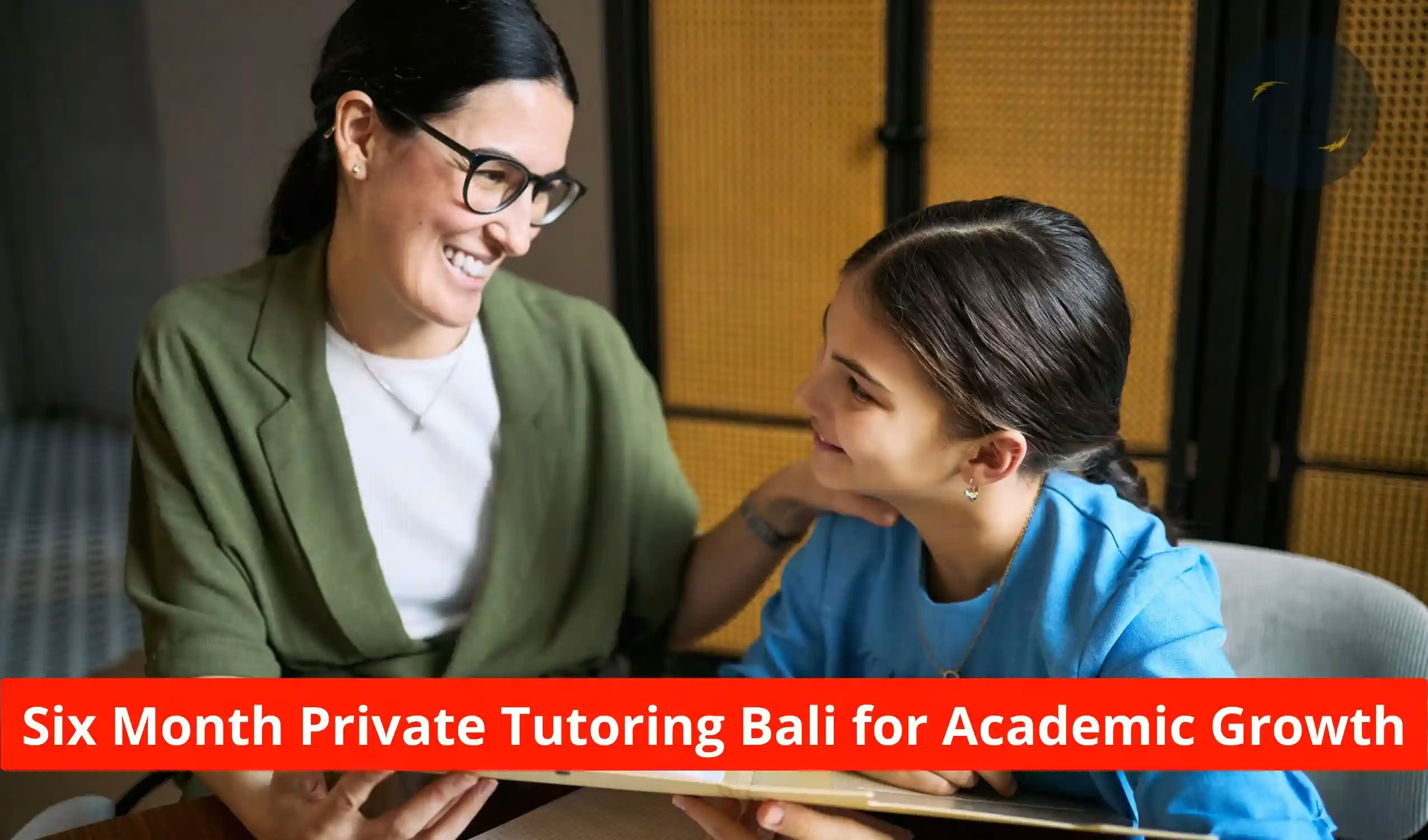
Six Month Private Tutoring Bali for Academic Growth
Choosing the right educational support can make a meaningful difference to a student’s confidence, academic performance, and long term development. However, meaningful progress rarely comes from a few isolated lessons.
Students often need consistent guidance, enough time to practise new skills, and regular feedback to turn difficult concepts into lasting knowledge.
This is where Six Month Private Tutoring Bali can offer a valuable approach for families seeking structured, personalised academic support.
A six month tutoring programme gives students time to strengthen their foundations, address learning gaps, and develop more effective study habits.
Rather than focusing only on an upcoming examination, the programme can support steady improvement across a school term or a longer academic period.
For families living in Bali, private tutoring can also offer the flexibility to balance school commitments, extracurricular activities, and family routines.
Lessons can focus on individual learning needs while helping students become more independent and confident.
Whether a student attends a local school, follows an international curriculum, or needs additional support with particular subjects, a carefully planned six month programme can create a clearer direction for learning.
What Is Six Month Private Tutoring Bali
Six Month Private Tutoring Bali is a longer term educational programme that provides individual academic support over approximately six months.
It allows a tutor and student to work towards clearly defined learning goals through regular lessons, guided practice, and ongoing progress reviews.
Unlike occasional tutoring, this arrangement encourages continuity. The tutor can build on previous lessons, revisit challenging concepts, and adjust the teaching approach as the student develops.
The programme can support different educational needs, including mathematics, English, science, reading, writing, examination preparation, and international curriculum subjects.
The exact subjects, lesson frequency, and teaching arrangements depend on the student’s requirements and the agreed programme.
For example, a student who struggles with mathematics may need to strengthen fractions, algebra, and problem solving before moving to more advanced topics.
Another student may understand the subject well but need to improve examination techniques, written explanations, or time management.
A six month period gives the tutor room to address these differences rather than relying on the same teaching method for every learner.
Why Choose a Six Month Tutoring Programme in Bali
Academic improvement involves more than understanding a single lesson. Students need opportunities to apply what they learn, recognise mistakes, and practise until they can work independently.
A six month tutoring programme in Bali creates a longer learning framework that can accommodate these stages. As lessons continue, the tutor can identify recurring difficulties and develop a more targeted teaching plan.
Build Stronger Academic Foundations
Students sometimes struggle with advanced topics because they have not fully understood earlier concepts. For instance, algebra becomes more difficult when a student has not developed confidence with fractions, negative numbers, or basic equations.
With consistent tutoring, the tutor can revisit these foundations before introducing more demanding material. Consequently, students can develop a deeper understanding instead of relying on memorisation.
This approach also helps students connect related concepts across different topics. Over time, they can approach unfamiliar questions with greater confidence because they understand the principles behind the answers.
Develop Consistent Study Habits
Regular lessons encourage students to establish a realistic learning routine. They can practise between sessions, review previous material, and prepare questions about topics they find challenging.
Furthermore, a tutor can introduce practical techniques such as breaking large assignments into smaller tasks, organising revision notes, and checking answers systematically.
These habits can support academic development beyond the tutoring period. Students gradually learn how to manage their own work rather than depending entirely on direct assistance.
Improve Confidence Through Personal Attention
Some students hesitate to ask questions in a classroom because they worry about making mistakes or slowing down their classmates. Private tutoring creates a more personal setting where they can discuss difficulties openly.
The tutor can adjust explanations, provide additional examples, and allow more time for practice when necessary. Meanwhile, students can receive feedback that addresses their individual strengths and areas for improvement.
As understanding improves, students may become more willing to participate in class, attempt unfamiliar questions, and take responsibility for their learning.
How the Six Month Academic Tutoring Programme Works
A successful six month academic tutoring programme begins with a clear understanding of the student’s current level and educational objectives.
The tutor then uses this information to guide lesson planning, practice activities, and progress reviews throughout the programme.
The exact structure should reflect the student’s age, school curriculum, preferred learning format, and available study time. Nevertheless, dividing the programme into manageable stages can make the overall direction easier for families to understand.
Initial Consultation and Learning Assessment
The first stage focuses on understanding what the student needs. Parents and students can discuss academic challenges, preferred subjects, school expectations, learning preferences, and goals for the coming months.
An initial assessment can help identify areas of strength and topics that require additional attention. Depending on the subject, the tutor may review previous schoolwork, discuss classroom experiences, examine test results, or use suitable practice questions.
This information provides a starting point for planning. It also helps establish realistic expectations about the areas the programme can address.
Families can explore available tutoring options and begin discussing their requirements through the Privat Bali registration shop.
Personalised Learning Plan
After the initial discussion, the tutor can organise learning priorities into a practical plan. The plan may include specific subject topics, skill development, homework support, examination preparation, and independent study activities.
For example, an English programme may focus on reading comprehension, grammar, vocabulary, essay structure, and academic writing. A science programme may concentrate on conceptual understanding, interpreting diagrams, explaining scientific processes, and answering structured questions.
The tutor can also identify which topics require immediate attention and which can wait until the student develops stronger foundations.
Importantly, the plan should remain flexible. If the student makes progress faster than expected or encounters a new challenge at school, the tutor can revise the next lessons accordingly.
Regular Tutoring Sessions
The tutor and family agree on a suitable schedule based on the student’s needs and availability. Lessons may take place at home or through an online arrangement when the service supports that format.
During each session, the tutor can explain concepts, demonstrate examples, guide practice, and review previous material. The student should also have opportunities to solve problems independently and explain their reasoning.
Between sessions, short exercises or revision activities can help reinforce learning. However, the workload should remain appropriate for the student’s age and existing school responsibilities.
Consistency matters more than creating an unnecessarily demanding timetable. A realistic routine gives students a better opportunity to sustain their effort throughout the six month period.
Progress Reviews and Learning Adjustments
Regular reviews help families understand whether the programme is moving in the intended direction. The tutor can compare current performance with the initial assessment and examine changes in accuracy, understanding, independence, and confidence.
For instance, a student may initially need repeated explanations to solve algebra questions. After several weeks of focused practice, the student may begin selecting the correct methods independently.
This example illustrates a useful type of progress, although individual results depend on the student’s starting point, attendance, practice, and learning needs.
When progress slows, the tutor can investigate the reason rather than simply increasing the workload. The student may need a different explanation, more foundational practice, or additional time to master a difficult concept.
What Can Students Achieve in Six Months
Six months offers a meaningful period for developing academic skills, but it does not guarantee a particular grade or examination result. Progress depends on several factors, including the student’s current ability, learning objectives, lesson frequency, attendance, and practice outside tutoring sessions.
Setting specific and measurable goals can make improvement easier to recognise.
Strengthen Subject Knowledge
Students can work through important topics in a more organised sequence. Rather than moving between unrelated exercises, lessons can build understanding step by step.
In mathematics, this might involve strengthening number skills before progressing to algebra and more complex problem solving. In English, students may develop stronger sentence construction before working on longer essays and analytical writing.
This structure helps students recognise how individual skills connect to broader academic requirements.
Improve Examination Readiness
Students preparing for school examinations or international assessments can use the programme to review subject knowledge, practise examination questions, and understand assessment expectations.
The tutor can help them recognise common question formats, organise answers clearly, and allocate time more effectively. Practice tests may also reveal topics that need further attention.
Nevertheless, examination preparation should match the relevant syllabus and assessment schedule. Families should discuss specific examination requirements during the initial consultation.
Encourage Independent Learning
A valuable outcome of tutoring is the ability to approach schoolwork with less direct assistance. Students can practise planning revision, identifying mistakes, checking their reasoning, and asking more focused questions.
These skills become particularly useful as academic demands increase. They also help students prepare for future subjects that require greater independence.
Six Month Home Tutoring Bali for Flexible Learning
For families who prefer learning at home, six month home tutoring Bali can provide a practical way to integrate academic support into everyday routines.
Studying at home can reduce the need to travel to a tutoring centre and may help students feel comfortable asking questions. Parents can also find it easier to coordinate lessons with school hours and other family commitments.
However, the home environment still needs a suitable learning space. A quiet table, adequate lighting, necessary books, and a reliable internet connection for online resources can help students focus.
Parents should also agree on a realistic lesson schedule with the tutoring provider. The availability of particular tutors, subjects, locations, and lesson times needs confirmation before the programme begins.
For international families, home tutoring can be especially useful when students need additional support with Cambridge, IB, IGCSE, or another school curriculum. The family should explain the curriculum and current academic expectations so the tutor can determine whether their expertise matches the student’s needs.
Choosing Subjects and Setting Realistic Learning Targets
A six month programme works best when families prioritise the areas that matter most to the student. Although some learners need support across several subjects, others benefit more from concentrating on one subject or a small number of specific skills.
Mathematics and Science Tutoring
Mathematics tutoring can address arithmetic, fractions, algebra, geometry, statistics, calculus, and examination problem solving according to the student’s level.
Science tutoring may cover biology, chemistry, physics, or integrated science. Lessons can combine explanations with diagrams, worked examples, and questions that encourage students to apply scientific concepts.
For both subjects, the tutor should identify whether difficulties arise from missing foundational knowledge, misunderstanding instructions, calculation errors, or limited practice.
English and Academic Writing
English tutoring can support reading comprehension, vocabulary, grammar, sentence structure, essay writing, and verbal communication.
For students attending international schools, academic English may require particular attention. Understanding everyday conversation does not always mean a student can interpret complex reading passages or construct a well supported academic argument.
Regular practice can help students express ideas more clearly and organise their writing more effectively.
International Curriculum Support
Students following international curricula may need lessons that align with their school’s topics, terminology, and assessment criteria.
Families can share relevant syllabuses, assignments, textbooks, and teacher feedback where appropriate. This information helps the tutor connect private lessons with classroom learning.
Before confirming a programme, parents should verify that the tutor can support the specific curriculum and academic level.
How Often Should Students Attend Lessons
The ideal lesson frequency depends on the student’s goals, school workload, age, and the amount of support required. Some students may benefit from one session per week, while others may need two or more sessions to address substantial learning gaps or prepare for important examinations.
A consultation can help families consider an appropriate schedule. The tutor should also allow enough time between lessons for students to practise and consolidate new concepts.
For example, a student who needs help understanding weekly mathematics topics may benefit from regular sessions throughout the school term. By contrast, a student preparing for a particular examination may require a more concentrated revision schedule during an agreed period.
The six month duration does not automatically determine the number of lessons. Families should confirm the total sessions, lesson length, frequency, and any holiday arrangements before making a commitment.
Understanding Programme Terms and Package Conditions
Before enrolling in a six month tutoring programme, families should understand exactly what the package includes. Clear terms help everyone plan the learning process and avoid misunderstandings later.
The provider and family should confirm the programme start date, duration, number of sessions, lesson length, selected subjects, teaching location, and tutor availability.
They should also discuss payment arrangements, cancellation procedures, rescheduling rules, public holidays, and what happens when a student or tutor cannot attend a scheduled lesson.
If the programme includes learning materials, progress reports, online resources, or assessments, the family should clarify how and when the tutor will provide them.
It is equally important to distinguish between the six month programme period and the number of teaching sessions. Six calendar months do not necessarily represent a fixed number of lessons because holidays, school schedules, and agreed breaks can affect delivery.
Families should review the current package details and obtain confirmation of any terms that are not clearly stated on the website. This creates a more transparent foundation for a longer learning commitment.
How Parents Can Support Academic Progress at Home
Tutoring becomes more effective when students receive consistent encouragement outside scheduled lessons. Parents do not need to act as additional teachers. Instead, they can help create the conditions that make regular learning possible.
First, establish a manageable study routine. A consistent time for homework and revision can help students balance tutoring with schoolwork, rest, and extracurricular activities.
Next, encourage students to explain what they learned. Asking them to describe a mathematical method or summarise a reading passage can reveal whether they understand the material.
Parents can also communicate relevant observations to the tutor. If a student repeatedly struggles with homework or feels overwhelmed by a particular subject, this information can help the tutor adjust future lessons.
Finally, recognise effort as well as results. Completing a difficult assignment independently, correcting recurring mistakes, or asking thoughtful questions can represent meaningful progress even before examination grades change.
For families seeking a more structured approach, exploring available private tutoring programmes at Privat Bali is a useful starting point for discussing the student’s needs and preferred learning arrangements.
Why Consistency Matters More Than Short Term Results
A six month tutoring programme should focus on building skills that students can continue using after the programme ends. Immediate improvements may be encouraging, but lasting academic development also depends on understanding, practice, and the ability to apply knowledge in new situations.
Students need time to make mistakes, receive feedback, and try different approaches. Some topics may improve quickly, while others require repeated practice before the student feels confident.
Consequently, a useful progress review considers more than a single test score. It can examine the student’s accuracy, reasoning, willingness to attempt challenging questions, organisation, and independence.
Families should also recognise that tutoring complements school education rather than replacing it. Regular attendance, classroom participation, appropriate practice, and communication between parents and tutors all contribute to a more coherent learning experience.
With realistic expectations and a clear plan, six months can provide a valuable opportunity to establish stronger academic habits and prepare for future learning.
Begin Your Six Month Private Tutoring Journey in Bali
Choosing a tutoring programme is an important decision for both students and parents. The best starting point is a clear conversation about academic goals, current challenges, preferred subjects, and the learning environment that suits the student.
Privat Bali offers private tutoring options for different educational needs, including personalised home learning and support for international curricula. Families can explore the available programmes and discuss the most appropriate arrangement before confirming their requirements.
Rather than choosing a package based only on duration, consider how the teaching plan, tutor expertise, lesson schedule, and progress reviews will support the student’s goals.
Explore the Privat Bali Shop to review available tutoring options and take the next step towards a more focused and consistent learning experience.
Frequently Asked Questions About Six Month Private Tutoring Bali
What is included in Six Month Private Tutoring Bali
The programme should provide a clear learning arrangement based on the student’s academic needs. Depending on the agreed package, this may include an initial discussion, subject specific lessons, personalised learning goals, practice activities, and progress reviews. Families should confirm the exact inclusions with the provider before registering.
Is a six month tutoring programme suitable for international school students
Yes, it can suit international school students who need additional support with subjects, assignments, curriculum transitions, or examination preparation. However, families should confirm that the tutor understands the student’s particular curriculum, school expectations, and academic level.
Can students receive tutoring at home in Bali
Home tutoring may be available depending on the subject, tutor, location, and schedule. Families should discuss their address area and preferred lesson times with Privat Bali to confirm availability before selecting a programme.
How many lessons does a six month tutoring package include
The total number of lessons depends on the package terms and agreed teaching schedule. A six month duration does not automatically mean a fixed number of sessions. Before registering, confirm the number of lessons, session length, teaching frequency, and arrangements for holidays or rescheduling.
Can parents choose the subjects and learning goals
Families can discuss the student’s preferred subjects and academic priorities during the initial consultation. The final learning plan should reflect the student’s needs, the tutor’s expertise, and the scope of the selected programme.
How does the tutor evaluate academic progress
A tutor can review practice exercises, homework, topic assessments, examination questions, and the student’s ability to work independently. Regular discussions with parents can provide additional context. The review method should match the student’s learning goals and the programme arrangements.
Is six months enough to improve academic performance
Six months can provide meaningful time to strengthen subject knowledge and develop better study habits. However, the level of improvement varies according to the student’s starting point, attendance, lesson frequency, practice, and learning needs. No specific grade or result should be guaranteed without a sound basis.
Can the tutoring schedule change during the programme
Schedule changes depend on tutor availability and the package’s rescheduling conditions. Families should confirm how to request changes, how much notice they must provide, and whether missed lessons can be rearranged.
How can families register for private tutoring in Bali
Families can begin by exploring available options at the Privat Bali Shop. They should identify the student’s age, grade, curriculum, preferred subjects, learning goals, and preferred schedule. The provider can then clarify the available arrangements and relevant package conditions.
Is a six month programme better than short term tutoring
Neither option suits every student. Short term tutoring may help with a particular assignment or examination, while a six month programme can offer more time for structured practice and continued development. The right choice depends on the student’s needs, goals, and available time.
Related Articles for Private Tutoring in Bali
Explore these related resources to learn more about private tutoring, home learning, international education, and personalised academic support in Bali.
Private Tutoring Bali for International Families and Home Based Learning
Read about personalised academic support, international curricula, flexible learning, and home tutoring for families living in Bali.
Private Tutor Bali for Personalized Learning at Home
Discover how individual tutoring can support different subjects, academic levels, and learning goals in a familiar home environment.
Personalized Home Tutoring
Explore private tutoring arrangements for students who need personalised support aligned with their learning preferences and international curriculum requirements.
Personalized Learning Program Bali for Expat Academic Support
Learn how a personalised learning approach can help international families address curriculum transitions, academic challenges, and individual learning needs.
Tutor Me Bali for International School Students and Expat Families
Discover academic support options for international school students, including individual lessons, flexible scheduling, and long term learning development.
Education Consultation Service for Smarter Academic Planning
Explore how an education consultation can help families understand tutoring options, identify academic priorities, and plan the next stage of a student’s education.
Final Thoughts
Six Month Private Tutoring Bali offers families an opportunity to approach academic development with greater structure, consistency, and personal attention. By identifying clear goals, choosing suitable subjects, agreeing on a realistic schedule, and reviewing progress regularly, students can work towards stronger understanding and more independent learning habits.
Every student develops differently. Therefore, the most useful programme is one that responds to the learner’s actual needs instead of relying on a standard timetable or unrealistic promises.
For families ready to explore their options, the next step is to discuss the student’s requirements and review the available programmes through Privat Bali.
Explore private tutoring programmes at https://www.privatbali.com/shop/